Mon-Sat 9:00 AM - 5:00 PM
Permanent foundation crack repair using high-strength epoxy injection for structural stability.
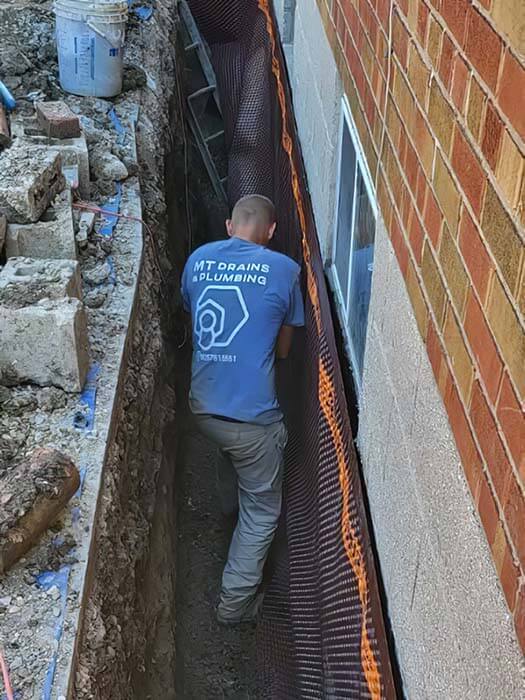
Epoxy injection is a structural crack repair method that fills foundation cracks with a high-strength adhesive resin that bonds cracked concrete back together. Unlike polyurethane injection, which creates a flexible waterproof seal, epoxy creates a rigid bond that is actually stronger than the original concrete — restoring the wall's structural integrity. Epoxy injection is the preferred method when a crack is structural in nature, meaning it affects the wall's ability to carry load or resist lateral soil pressure.
In Toronto, structural foundation cracks most commonly result from lateral pressure — the outward push of saturated clay soil against basement walls. When clay absorbs water, it expands and pushes inward on the foundation. Over decades of seasonal wet-dry cycles, this pressure creates horizontal cracks, diagonal corner cracks, and in severe cases, visible wall displacement. Epoxy injection repairs the crack and restores the concrete's tensile strength at the fracture point.
Why Choose Us
The distinction between epoxy and polyurethane injection is critical and often misunderstood. Polyurethane is a flexible foam that expands inside a crack to create a waterproof seal — it's the right choice for non-structural shrinkage cracks that are simply leaking water. Epoxy is a rigid two-part adhesive that bonds the cracked surfaces together permanently — it's the right choice when the crack represents a structural weakness that needs to be restored to full load-bearing capacity.
We evaluate every crack before recommending a repair method. A vertical hairline crack in the middle of a wall is almost certainly a non-structural shrinkage crack — polyurethane is appropriate. A horizontal crack with wall displacement, a stair-step crack in a block wall, or a diagonal crack radiating from a corner likely has structural significance — epoxy is required. Using the wrong method wastes money and leaves the underlying problem unaddressed.
Don't Ignore the Signs
Our epoxy injection process uses low-viscosity structural epoxy that flows into the finest cracks under controlled pressure. We first seal the crack surface with a fast-setting paste and install injection ports at 6-8 inch intervals along the crack length. Starting from the lowest port, we inject epoxy under pressure and watch for it to appear at the next port above — confirming complete penetration through the wall's full 8-10 inch thickness. Each port is injected in sequence until the entire crack is filled from bottom to top.
For cracks that indicate ongoing structural movement — such as horizontal cracks from lateral soil pressure — we combine epoxy injection with carbon fibre reinforcement straps. After the epoxy cures (typically 24-48 hours), we bond high-tensile carbon fibre straps across the crack at 12-inch intervals using structural adhesive. The carbon fibre prevents future wall movement at that location, effectively bracing the wall against the soil pressure that caused the original crack.
Epoxy injection is a permanent repair when the crack is stable. The cured epoxy bond exceeds the tensile strength of the surrounding concrete, which means if new cracking occurs, it will appear alongside the repair — not through it. For cracks caused by one-time settlement events, epoxy injection alone provides a lifetime solution. For cracks caused by ongoing forces like lateral soil pressure, the addition of carbon fibre straps ensures the repair holds against the continued force.
Costs for epoxy injection range from $400-$800 per crack in Toronto, which is comparable to polyurethane injection. Carbon fibre reinforcement adds $300-$500 per strap, with most cracks requiring 2-4 straps. The investment is modest compared to the structural risk of leaving a compromised wall unrepaired. Every epoxy injection we perform includes a written lifetime warranty, before-and-after documentation, and a detailed report suitable for your insurance company or home sale disclosure.
Materials & Methods
Two-part epoxy resin that flows into hairline cracks under pressure, filling the full wall thickness and curing to a strength exceeding the original concrete.
Controlled-pressure injection through ports ensures complete penetration from the interior surface through the full 8-10 inch wall thickness to the exterior face.
High-tensile carbon fibre fabric bonded across cracks with structural adhesive. Prevents future wall movement from lateral soil pressure without the bulk of steel beam reinforcement.
Our Process
We assess the crack type, width, direction, and signs of structural movement to confirm epoxy is the appropriate repair method.
The crack surface is sealed with fast-setting paste and injection ports are installed at 6-8 inch intervals along the crack length.
Low-viscosity structural epoxy is injected from bottom to top under controlled pressure, with flow confirmed at each successive port.
For structurally active cracks, carbon fibre straps are bonded across the cured repair at 12-inch intervals to prevent future wall movement.
Before-and-after photos are taken, a detailed repair report is prepared, and your lifetime warranty certificate is provided.
Client Reviews
“Outstanding job! My basement is finally dry thanks to your team. No more musty smell or moisture problems. A+ service!”

“From the initial appointment to final inspection, service was exceptional. Prompt, professional, and results exceeded expectations.”

“Professional and friendly staff. They solved our leaky basement in no time. The results were fantastic. Basement has been leak-free since the work was done.”

Experience & Expertise
Related Solutions
Professional crack injection and repair services to seal foundation cracks and prevent water intrusion.
Learn More →Complete interior drainage systems, sealants, and sump pumps to manage water that's already entering your basement.
Learn More →Complete foundation protection systems combining interior and exterior waterproofing methods.
Learn More →Service Areas
We provide epoxy injection throughout Toronto and the Greater Toronto Area.
Common Questions