Mon-Sat 9:00 AM - 5:00 PM
Professional weeping tile and French drain systems to redirect water away from your foundation.
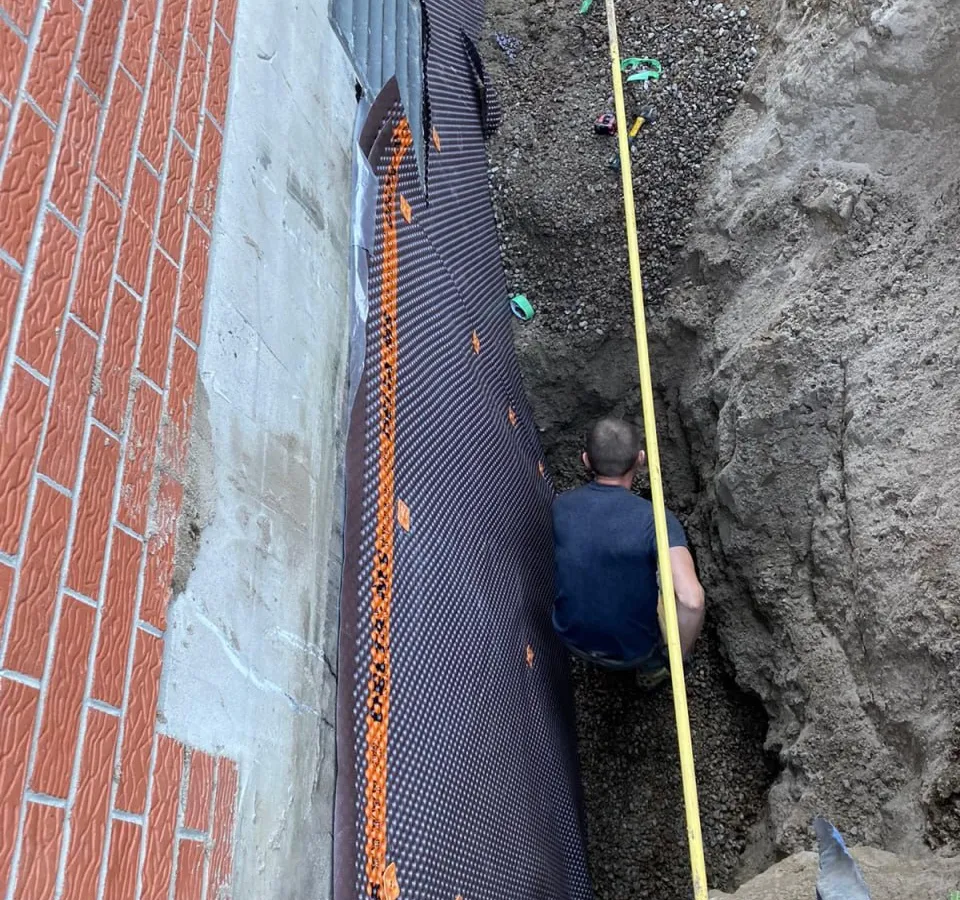
Weeping tile is the underground perforated pipe system installed alongside your foundation footing that collects groundwater and channels it to a sump pump or daylight outlet before it can enter your basement. The name comes from the original clay tiles used in construction before the 1970s — today, modern weeping tile uses 4-inch perforated PVC pipe wrapped in geotextile filter fabric, which resists clogging and lasts decades longer than the old clay systems.
In Toronto and the GTA, most homes built before 1980 have original clay or concrete weeping tile that has either collapsed, been crushed by soil settlement, or clogged with sediment and tree roots. When weeping tile fails, there is no longer any drainage path for groundwater. The water that would normally flow to a drain instead builds up against your foundation, creating hydrostatic pressure that forces moisture through every crack, joint, and pore in the concrete.
Why Choose Us
Failed weeping tile is the single most common cause of chronic basement water problems in older Toronto homes. Homeowners often try interior sealants, crack injections, or even sump pump installations without realizing that the root cause is a drainage system that stopped working years ago. Without functioning weeping tile to collect and route groundwater, a sump pump has nothing to pump — the water simply enters through the walls and floor instead of being directed to the pit.
We diagnose weeping tile failure by examining your basement for patterns of water entry. If water comes in along the full perimeter of the floor-wall joint rather than from specific cracks, the weeping tile has almost certainly failed. A camera inspection of the existing pipe — when accessible — confirms the diagnosis by showing collapse, root intrusion, or sediment buildup blocking the flow.
Don't Ignore the Signs
Weeping tile installation can be done from either the interior or exterior, depending on your situation. Interior weeping tile involves breaking a trench along the inside perimeter of your basement floor, laying perforated pipe in a gravel bed sloped toward the sump pit, and restoring the concrete floor. Exterior weeping tile requires excavating down to the footing outside the foundation, removing the old system, and installing new pipe in a gravel bed before backfilling.
Interior installation is faster and less disruptive — typically 2-4 days with no landscaping impact. Exterior installation is done during full exterior waterproofing projects when the foundation is already excavated. Both methods use the same 4-inch perforated PVC pipe with filter fabric, and both deliver the same drainage performance. The choice depends on whether you also need wall membrane application, which requires exterior access.
Toronto's soil composition is a critical factor in weeping tile design. The heavy clay soils found across most of the GTA have extremely low permeability, meaning water doesn't drain through them naturally. Instead, it sits against the foundation and creates sustained pressure. Proper weeping tile installation accounts for this by using a generous gravel bed (6-12 inches) around the pipe, which creates a high-permeability zone that attracts groundwater from the surrounding clay and funnels it into the drainage system.
Every weeping tile system we install uses rigid-wall perforated PVC rather than the corrugated flexible pipe sold at hardware stores. Corrugated pipe deforms under soil pressure over time and creates low points where sediment accumulates. Rigid PVC maintains its shape and grade permanently. Combined with geotextile filter fabric that prevents fine soil particles from entering the pipe, our systems are designed for 50+ years of reliable drainage.
Materials & Methods
4-inch Schedule 40 perforated PVC pipe that maintains its shape and grade under soil pressure permanently — unlike corrugated flexible pipe that deforms and creates sediment traps.
Non-woven filter fabric wrapped around the pipe and gravel bed prevents fine clay particles from entering the drainage system while allowing water to flow freely.
3/4-inch clear stone (no fines) creates a high-permeability zone around the pipe that attracts groundwater from surrounding clay soil and directs it into the weeping tile.
A waterproof camera is fed through existing weeping tile access points to identify collapse, root intrusion, sediment buildup, and connection failures before recommending replacement.
Our Process
We inspect your basement water entry patterns, evaluate existing drainage, and determine whether interior or exterior weeping tile is the best approach.
For interior: a perimeter trench is cut in the basement floor. For exterior: excavation to the footing. Any existing failed drainage is removed.
A 6-12 inch gravel bed is laid in the trench with proper slope toward the sump pit. Perforated PVC pipe wrapped in filter fabric is placed on the gravel.
The weeping tile is connected to the sump pit with a proper inlet. If no sump pump exists, one is installed as part of the project.
The trench is covered with additional gravel and the concrete floor is restored (interior) or the excavation is backfilled with gravel and native soil (exterior).
Client Reviews
“Outstanding job! My basement is finally dry thanks to your team. No more musty smell or moisture problems. A+ service!”

“From the initial appointment to final inspection, service was exceptional. Prompt, professional, and results exceeded expectations.”

“Professional and friendly staff. They solved our leaky basement in no time. The results were fantastic. Basement has been leak-free since the work was done.”

Experience & Expertise
Related Solutions
Complete interior drainage systems, sealants, and sump pumps to manage water that's already entering your basement.
Learn More →Comprehensive exterior foundation protection with membranes and drainage to prevent water from reaching your basement.
Learn More →Reliable sump pump systems with battery backup to protect your basement from flooding and water damage.
Learn More →Service Areas
We provide weeping tile installation throughout Toronto and the Greater Toronto Area.
Common Questions